Sound familiar?Oshawa
- The call
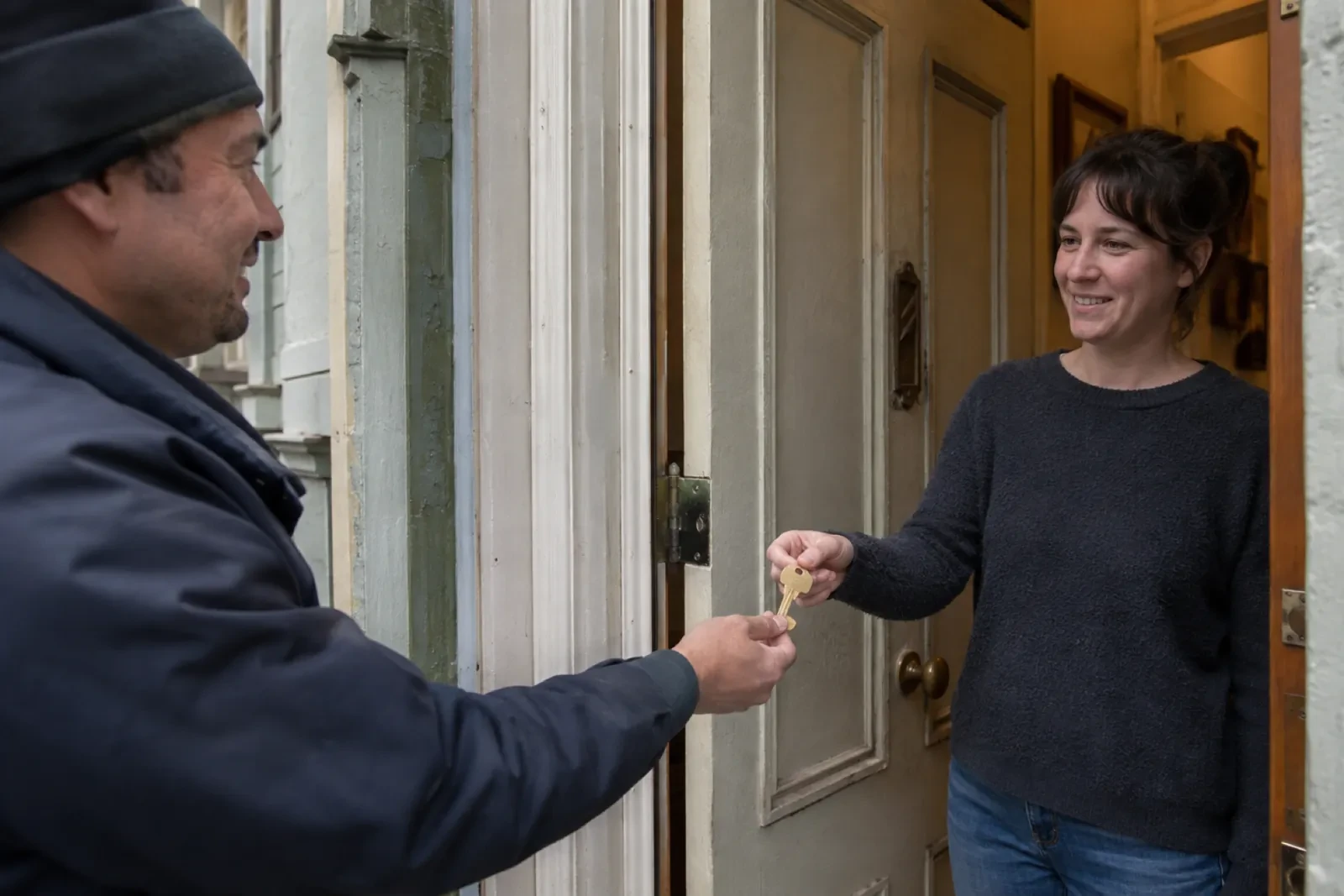
- You are inside, the deadbolt is thrown, and the thumb-turn will not budge. It moved a little last week with some effort. Now the door you walk through every day is a wall, and you need it open.
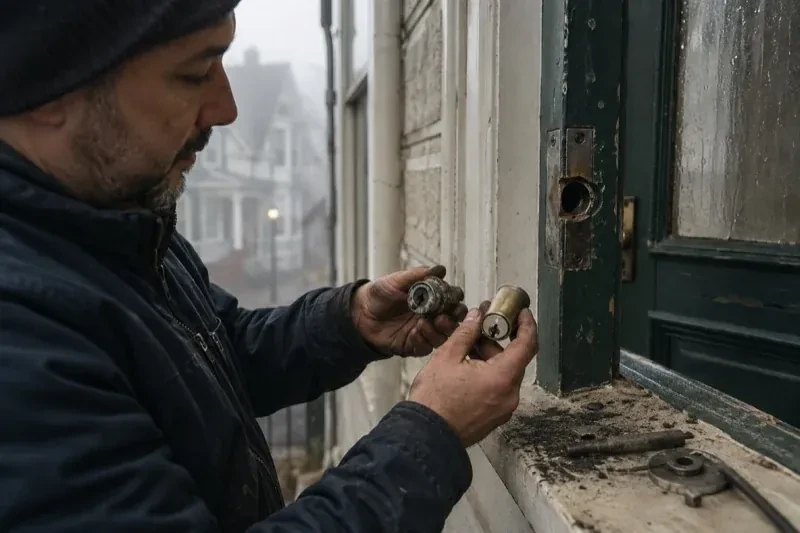
The shop's lever handle goes down as usual, but the latch inside the mortise case never pulls back. Staff are waiting on the sidewalk with their coffees, the door is locked, and the handle is simply moving air.
This service has a season here. The first wet fortnight of winter sends meltwater into keyways that freezes overnight, and doors on the north and shaded sides of a building stay iced the longest. Salt spray from driveways and walkways leaves a crust that thickens with every thaw. Then summer humidity swells wood doors until the bolt drags in its pocket. A jammed lock opening in these conditions means thawing without boiling water, flushing out salt, drying the cylinder, and dressing it with a lubricant that sheds moisture, along with a check of the door so the same weather does not jam it again next month.
Sound familiar?Oshawa
Seized & Jammed Lock Opening · Oshawa
Scene 1
Lever handles and mortise locks add parts that a plain deadbolt does not have, and each can jam on its own. A lever that drops without retracting the latch can have a tired return spring or a worn hub inside the case, though latch engagement, linkage, or the spindle can produce the same symptom. A thumb-turn that will not move can be a bent spindle, a stripped drive or a bolt pinned by the frame. On older houses and commercial doors the mortise case itself may be packed with decades of dust and dried grease. The locksmith works the lever, key and thumb-turn separately and feels where resistance starts, which locates the fault before the case is opened.
Scene 2
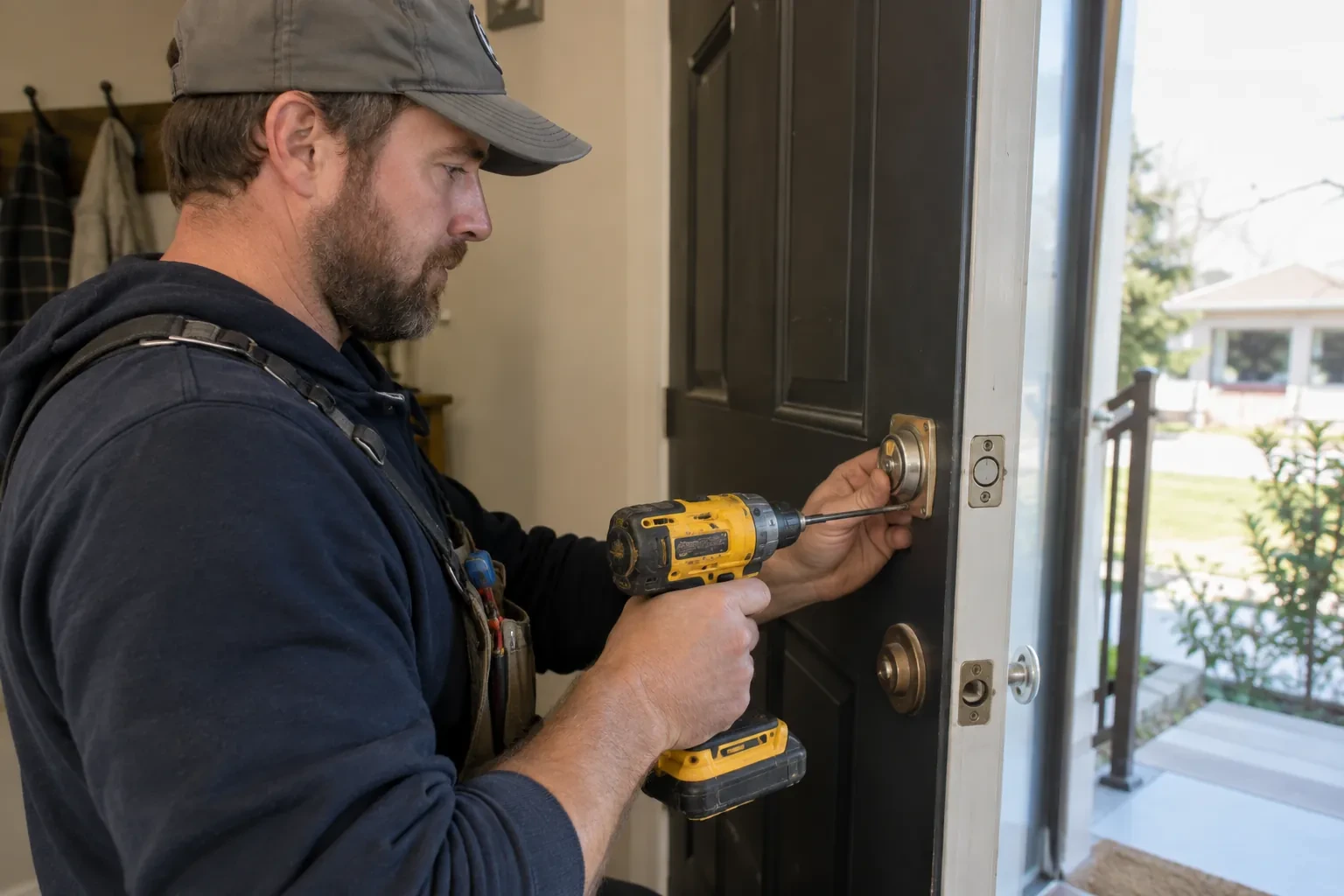
When the door is the cause, the opening is a matter of leverage rather than tools. The locksmith lifts, pushes or pulls the door to bring the bolt back into line with its pocket while the key turns, and the bolt slides home. With the door open, the reason is dealt with: hinge screws tightened or replaced with longer ones that reach the framing, a hinge shimmed to raise a dropped door, the strike plate moved or its edge dressed with a file, the bolt pocket deepened with a sharp chisel, or a weatherstrip trimmed. The lock is then thrown and retracted with the door closed until it moves without any pressure on the door.
Scene 3
If the door was the cause, the hinges, strike and seal have been set so the bolt has room. Keeping it that way is a seasonal habit: each spring and fall, try the lock with the door closed and no pressure on it, and snug the hinge and strike screws if the door has begun to drop. Wood keeps moving with humidity, so a door that swells in August may need a touch on the strike in September. A door that suddenly needs a push to lock is telling you early, while the fix is still a screwdriver and not a seized bolt.
What shapes the quoteMount Carmel Locksmith Pros
FeesSame any hour
Often, yes. A replacement cylinder in the same keyway can be pinned to the cuts on the key already on your ring, so the front and back doors stay on one key and nothing else in the house changes. If the old keyway is no longer made or the key is badly worn, the new cylinder comes with fresh keys and the other doors can be rekeyed to match in the same visit.
Three habits cover most of it. Lubricate the cylinder with a dry lock product twice a year and keep oils out of it. Check that the door locks with no pressure on it each spring and fall, snugging hinge and strike screws when it starts to drag. Keep a lock de-icer handy and fit a keyhole cover on exposed doors. And act on the first stiff turn, because a lock that still turns is a smaller job than one that has stopped.
They are close relatives. A key that will not come out is usually a plug that has not returned to its neutral position with the shell, a cylinder cap that has loosened, debris in the keyway, or a cylinder that is pinned incorrectly; some cylinders are also designed to hold the key until the plug is returned. The locksmith frees the key first, without pulling, then treats the cause the same way as any seized cylinder.
DurhamOntario
Seized & Jammed Lock Opening · Columbus
Every square is one home in a hundred.
On-site assessment
The shop's lever handle goes down as usual, but the latch inside the mortise case never pulls back.
(289) 367-6857, open 24/7.
On-site assessment preferred · (289) 367-6857, open 24/7