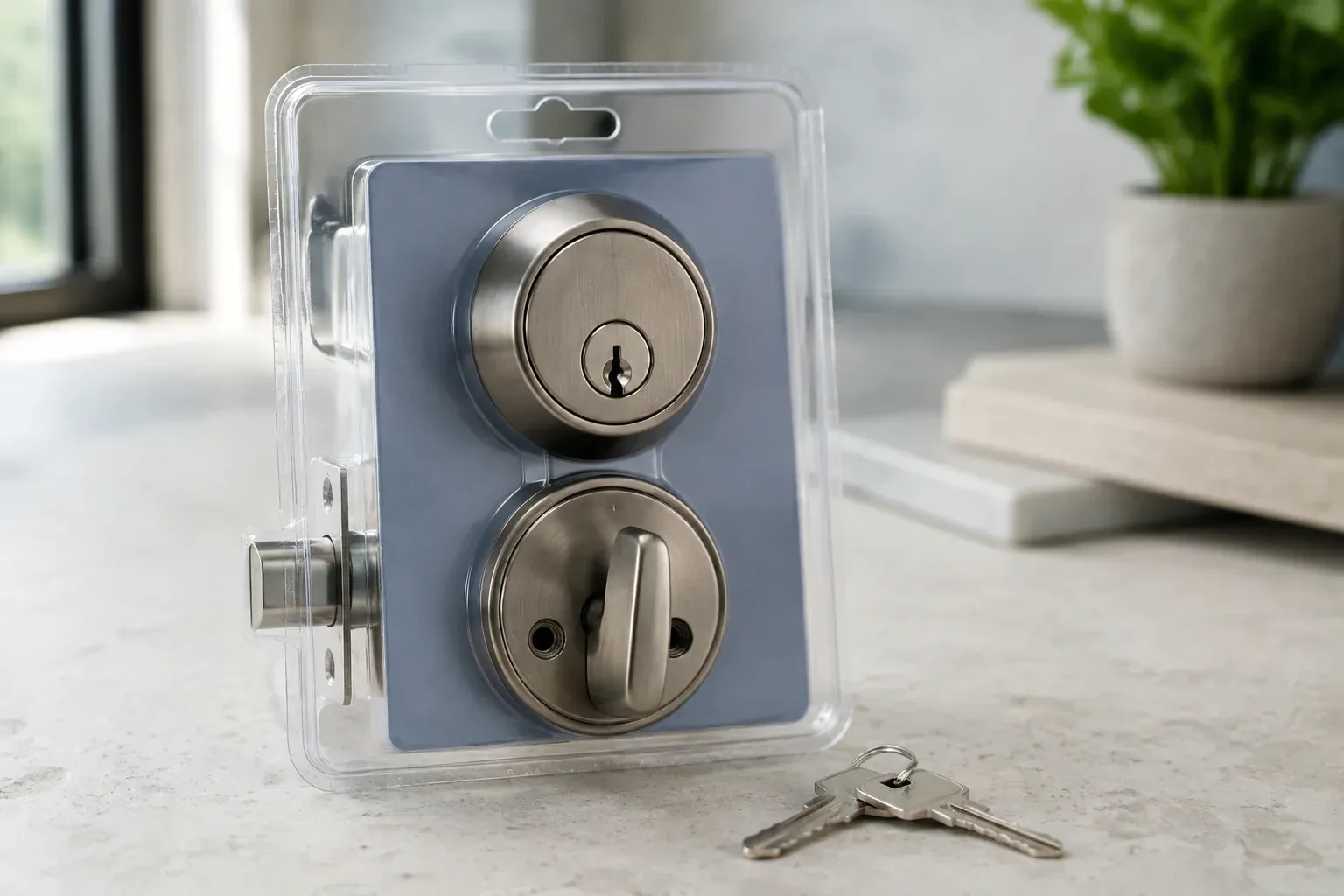
Sound familiar?Oshawa
- The call
- Someone tried the door last winter. The frame took it, but the strike plate is bent, one screw hole is stripped, and the bolt sits in the pocket at a slight angle. It still locks, and it still bothers you every night.
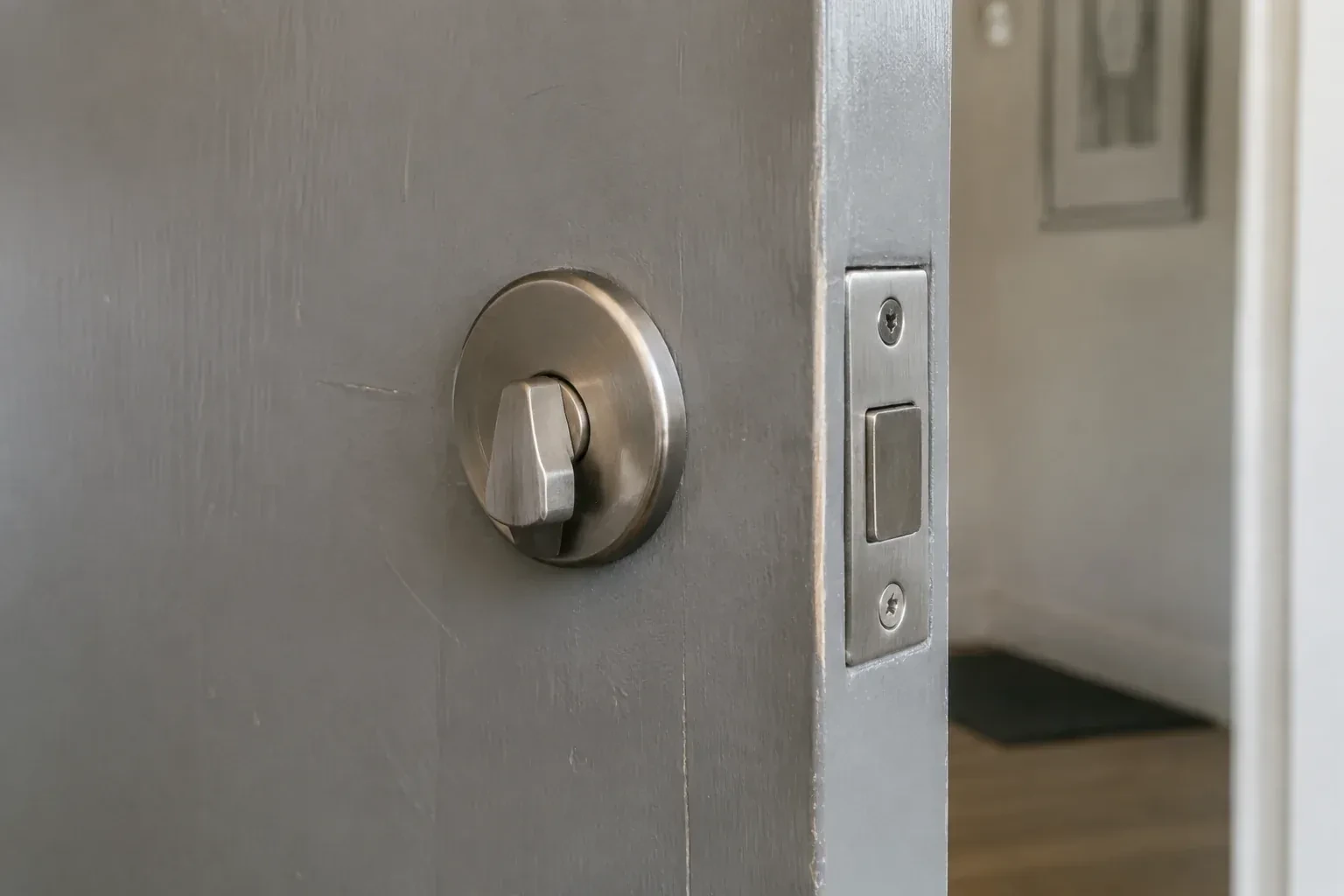
You moved in three weeks ago. The previous owner left a handful of keys, none labelled, and the bolt on the side door rattles in its housing.
A deadbolt installation is also the moment to sort out keys. The new cylinder can be pinned to match the key you already use, so the household stays on one key, or set to a fresh key if you would rather retire whatever copies are in circulation. Many keypad and smart deadbolts fit the same standard bore as a mechanical one, so a door prepared today for a keyed bolt often accepts one later, though the exact model's bore and thickness still need checking. Either way you leave with keys that work in every door they are meant to, tested one by one.
Sound familiar?Oshawa
Deadbolt Installation · Oshawa
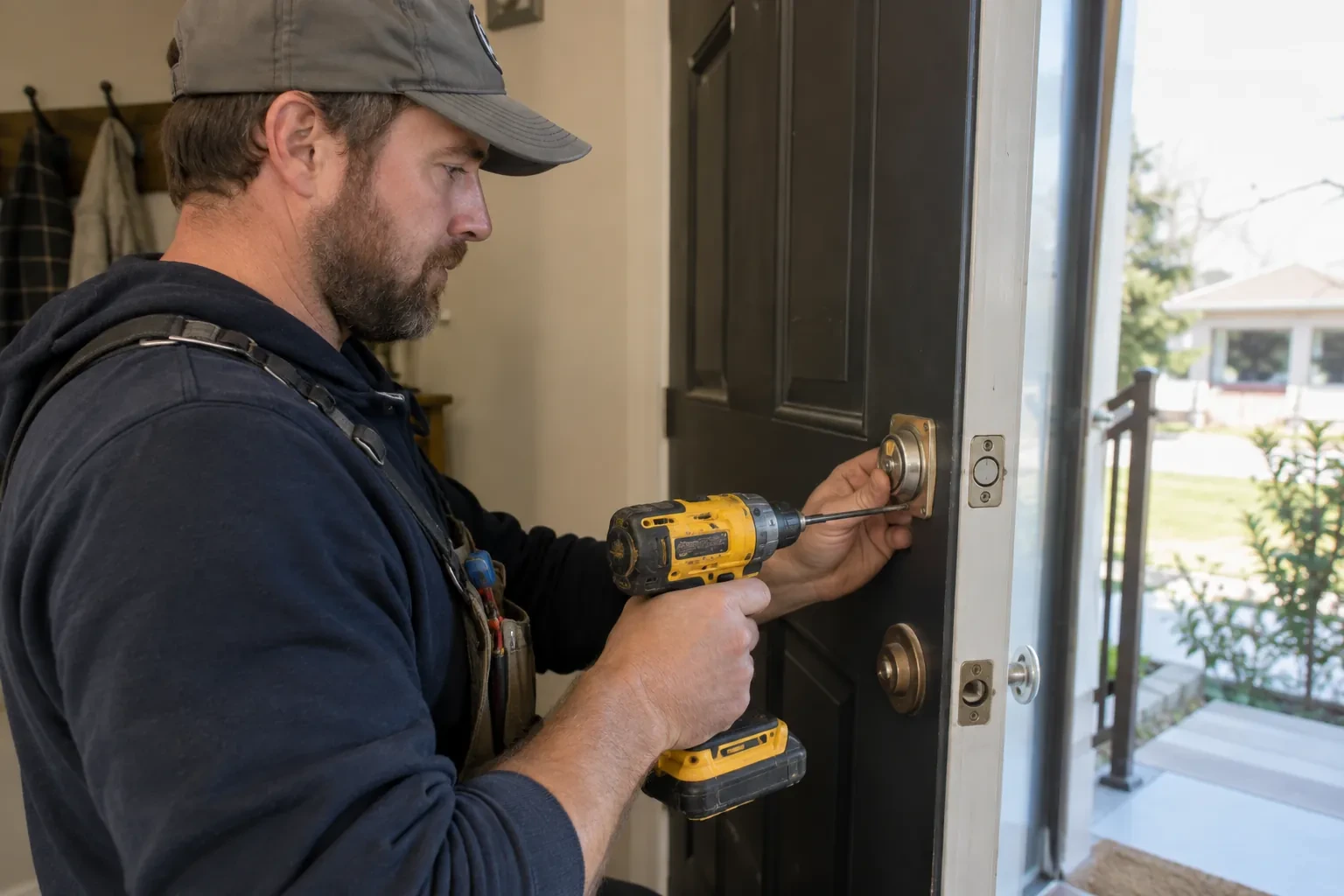
Scene 1
Deadbolts are built around two dimensions. The cross bore is the large hole through the face of the door, 54 mm on most residential hardware, though some older or imported locks used 38 mm. The backset is the distance from the door edge to the centre of that hole, 60 mm or 70 mm on nearly every door in this part of the world. If a deadbolt is being replaced, both are measured so the new lock lands in the existing holes without a shim or a gap. On a new installation they are chosen to match the knob below, so the two locks line up and any future keypad or smart deadbolt drops straight in.
Scene 2
The finished lock is proved in three stages. With the door open, the thumb-turn and then the key are cycled several times to confirm the bolt throws fully and returns freely. With the door closed, the same tests show whether the bolt clears the strike opening and seats in the pocket; any drag is marked with chalk and the strike is dressed or shifted until the bolt moves with fingertip effort. If the cylinder is being keyed to the household key, it is repinned on the bench and tested from outside with the door closed, and every key that should work is tried before the tools go back in the van.
Scene 3
A deadbolt asks for very little, and most of it happens twice a year. In spring and again in autumn, throw the bolt with the door closed and notice whether it still slides in freely; wood doors swell in humid summers and shrink in dry winter air, and the first sign is a bolt that needs the door pulled before it will lock. If so, a small strike adjustment puts it right. Give the bolt and keyway a puff of whatever lubricant the lock's own maker specifies, often dry PTFE or graphite, since some cylinders are serviced with oil instead. Wipe salt off the outside trim after a slushy week so the finish stays bright.
What shapes the quoteMount Carmel Locksmith Pros
FeesSame any hour
Very little is needed. Each spring and autumn, lock the door from inside and feel whether the bolt still goes home without the door being pulled; if it hesitates, the door has moved with the season and a small strike adjustment restores it. Whatever lubricant the lock's own maker specifies keeps it smooth, often a dry PTFE or graphite type in the keyway and along the bolt, though some cylinders are meant to be serviced with oil. In winter, wipe road salt off the outside trim to protect the finish.
Glass within reach of the lock is the one case where a plain thumb-turn deserves thought. Options include a captive thumb-turn that turns freely until you remove its small key, laminated glass or a tested security-film system with its specified frame attachment, or simply setting the bolt farther from the glass. Lock manufacturers describe sidelights as a weak point, so the locksmith measures the reach and lays out the choices rather than defaulting to a key on the inside.
Not when it is done for that door. Steel-clad doors are cut with a fine-toothed hole saw run slowly through the skin, guided by a jig so the saw cannot skate on the smooth face, and finished from both sides so each skin stays clean. Fibreglass is scored first so the surface does not chip. Shavings are vacuumed from the foam core, and the edge is finished with a collar or plate suited to the stile inside.
DurhamOntario
Deadbolt Installation · Columbus
Every square is one home in a hundred.
On-site assessment preferred · (289) 367-6857, open 24/7